
"The fear of dying pushes you to live."
As Ukraine marks the fourth anniversary of the full-scale Russian invasion, Sky News has partnered with Voices of Children, a Ukrainian charity, to tell the stories of teenagers living through war.
Oleksandra
I am 17. I was born and lived in the city of Bakhmut in the Donetsk region until the start of Russia's full-scale invasion. Over the past four years, I have moved four times, losing my home and the opportunity to see my peers and friends in person. I have been studying online for four-and-a-half years.
During the full-scale invasion, I first lost my grandfather and then my home. On 24 February 2022, the day of the invasion, my family packed our belongings and left for the Rivne region, nearly 700 miles away. My grandfather refused to leave. He wanted to stay in Bakhmut. Some of our extended family members were still there. On 27 March, doctors discovered a blood clot in his leg. My grandfather died in his hometown and is buried there. I was unable to say goodbye to him or go to the funeral.
My house has been destroyed, nothing remains but bricks. But in truth, I lost my home the moment my grandfather died. Home is about memories, and memories are about family. Over these four years, I have never truly felt at home anywhere, and sometimes it feels as though that sense of home may never return.
The first thing I do when I wake up is check the power outage schedule. Online classes start at 8.45am and end at 3.55pm. Every day begins with the news and ends the same way. Before bed, I check which regions are under air raid alerts.
Over time, I've got used to the fact that my peers communicate exclusively via the internet and messaging apps. I realised that if I did not maintain contact with friends and peers, the four walls could become my only "friends". It sounds frightening, but unfortunately, this is what life looks like today.
I try to talk to others as often as possible. I spend most of my day in my room and rarely leave the house before four in the afternoon. I live in a village, and in the nearest town there is almost nothing besides shops and cafes: no clubs, no activities, no real opportunities to grow.
The strength to keep going now comes from my younger brother - he cheers me up. It also comes from the support of my family and friends. I dream and hope to enter university, to find someone I love and to live the kind of life I want.
Marko
I'm 14 and I live in the city of Kryvyi Rih [a city in central Ukraine and Volodymyr Zelenskyy's hometown]. For me, a day during the war feels like Groundhog Day. It means waking up in the morning without any sense of control, during an air-raid alert before classes, knowing your only choice is to sit in a cold school shelter or stay at home. For me, it's a constant fear of dying without having done anything meaningful for others.
What's frightening and strange is that the fear of dying pushes you to live, to grow, to develop in every possible way. Over these four years, I've been trying to do what I would have done over an entire lifetime. I don't know what life will be like after the war, or who I will be, or whether I will even be at all. So for now, the war feels like my only chance to live.
The first day of real change for me was 25 February 2022. I was cleaning and washing out the basement at home, the improvised bomb shelter we still use. I remember the emotions when I first heard explosions, planes and sirens. Since then, the war has become a terrible backdrop even to good moments.
My birthday was on 16 July 2025. I spent it in the basement under shelling. I'm used to people congratulating me in the morning as a new day begins. But that day, the greetings started at midnight. We weren't sleeping because of a Russian attack. That night is etched in my memory, filled with a mix of emotions.
The hardest thing for me is coming to terms with what has happened. Understanding that life will never be the same. It's hard to navigate the search for justice in a world where objectivity may not even exist. It's emotionally exhausting to know that people keep dying, and they cannot influence it. What keeps me going today is the chance to live not only for myself. The chance to grow, to do something for others, to exchange knowledge and experiences. The chance to dream, to plan a future that feels fragile and uncertain, yet still desired. Both acquaintances and those closest to me help me hold on. I won't get another life.
Sofia
I'm from Odesa. The full-scale war began when I was 15. This year, I will turn 20. My father was killed on the frontline defending us. I think of him every morning at 9am, when the country pauses for the minute of silence.
I never imagined I would learn what silence truly is. It had always been layered with birdsong, laughter, the voices of passersby, the hum of cars.
But now, at exactly 9am, silence falls across the entire country. Your heart begins to pound. Slowly, you clasp your hands in front of you. You hear the breathing of your classmates. Their heads are bowed in respect, like yours. This silence is different, filled with despair, pain and anxiety that make it hard to breathe. In your mind, you quietly say "thank you" to your father, who remains forever imprisoned in this single minute. In that moment, which feels like an eternity, the ticking of the clock stops. Students return to their seats. The lecturer resumes the lesson. And your barely healed wound aches again. You simply don't show it.
At some point, you catch yourself thinking that this year you will turn 20. Why does it feel so hard to leave adolescence behind? Nothing costs as much as a childhood stolen by force.
In times of grief and overwhelming pain, I go home. I take off my shoes and sink my feet into the cool sand along the Odesa shore. Still, in the end, despair gives way to hope. Because the sea always listens, takes your anxiety and buries it in its depths.
Read more:
'Fearing Russians would target you because you're a girl' - stories from Ukraine's children
How have four years of war in Ukraine changed its two central figures?
The civilians who grabbed hunting rifles when Russians invaded
Mariia
I'm 19 and I don't know where I'm from anymore.
Sometimes, I'm troubled by how I no longer know where my home is. Over 19 years, it's changed three times. My preschool childhood was in Kamianske in Dnipropetrovsk, my primary school years in Feodosia in Crimea, my middle and high school years in Lviv, and now my university years are in Kyiv.
When I left and said goodbye to everyone in Feodosia, I told them I would come back. It feels as though I made that promise to Feodosia itself, and now, not by my own will, I am breaking it. I didn't really process that grief for a long time, and now I find myself crying about it often.
About two years after we moved, I began to forget Feodosia: the 40-minute walk to school, our summer house near Ordzhonikidze, the smell of the forest and sea, the park by the music school. A month ago, for the first time in eight years, I wandered through Feodosia on Google Maps. I cannot describe how good, painful and tender it felt at the same time. My mother and I have talked about how, even if we one day return to Crimea, to the places I now miss so deeply, they will hardly be the same places where little Marichka once ran. With those thoughts comes despair first, but then, gradually, acceptance.

(c) Sky News 2026: 'The fear of dying pushes you to live' - stories from Ukraine's children living through war
 Paranoia and absolute power: Ali Khamenei led Iran with supreme self-confidence
 Trump has tipped the Middle East into a massive war that could last weeks
 One dead and others injured at Abu Dhabi and Dubai airports - as missile threat grounds flights
 Big blasts heard over Dubai as people run for cover from Iranian missiles
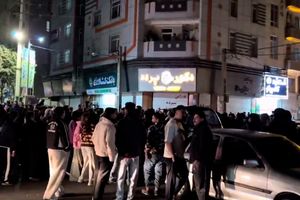 Iranians take to streets with different reactions to death of supreme leader Ali Khamenei
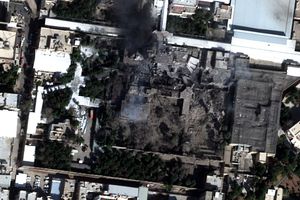 Where has been hit? Iran retaliates across Middle East after US-Israel strikes
 Brits 2026: Olivia Dean dominates awards, winning album of the year
 Brit Awards 2026: The surprise performers, tributes, and bits you might not have seen