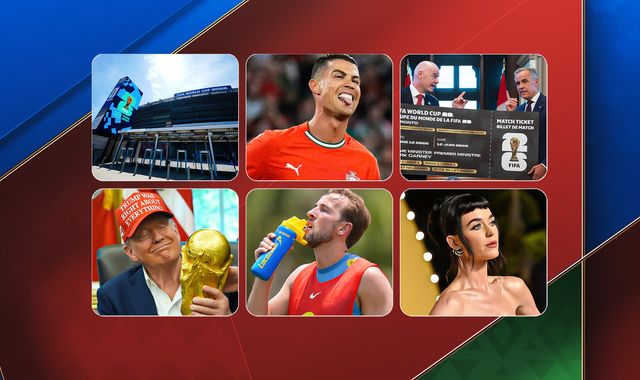
The wait is over. The World Cup is officially here! 48 teams, 48 key questions answered (yes, really!) to get you clued up for this summer's fiesta of football. It's going to be fun.
When does the World Cup start and finish?
The World Cup officially gets under way on Thursday, June 11 when Mexico face South Africa at 8pm BST, with an opening ceremony (more on that later) starting 90 minutes before the big kick-off.
The final will take place on Sunday July 19 in New Jersey, kick-off 8pm BST.
For the full match schedule, look no further than our day-by-day fixture breakdown...
Where is it taking place?
The 2026 World Cup will be hosted across three countries for the first time - USA, Mexico and Canada.
The USA previously hosted the tournament in 1994, while Mexico was the host nation in 1970 and 1986. Canada has never previously hosted the World Cup.
There are 16 stadiums hosting matches during the tournament - 11 in the US, two in Canada and three in Mexico.
Who's qualified?
This World Cup is the first to include 48 teams, an expansion from 32 previously - and you can find the full list here.
Sweden, Turkey, Bosnia & Herzegovina, Czech Republic, Iraq and DR Congo all qualified through play-offs.
Argentina, Brazil, France, Germany, Spain and England are among the big hitters - but there's no Italy, Serbia, Greece or Hungary from Europe. Nigeria and Cameroon - African nations with World Cup pedigree miss out, while there's no place for global powers China and India.
FIFA indefinitely suspended Russia in February 2022 due to the country's invasion of Ukraine.
Who are the debutants?
In total, there are four debuting nations at this year's World Cup. Cape Verde, Curacao, Jordan and Uzbekistan have all qualified for the very first time.
- Everything you need to know about Curacao
It is the highest number of newcomers in a single tournament since six countries made their debuts during the 2006 World Cup. Interestingly, only two of those countries are represented two decades later - Ivory Coast and Ghana.
How will 48 teams affect the format?
The World Cup previously featured eight groups of four teams. Each team would play the other teams in their group once, with the best two in each group progressing to the last 16.
The addition of 16 more sides means the 2026 tournament will have 12 groups of four. Again, each team plays the other teams in their group once. The best two sides - plus the eight best-ranked third-placed sides from the 12 groups - progress to the last 32, meaning there is an extra knockout round.
What times do the games kick off?
For a UK audience, matches kick off anywhere between 5pm and 5am. England's group matches against Croatia (June 17) and Ghana (June 23) will be at 9pm, while they play Panama (June 27) at 10pm.
Scotland play Haiti (June 14) at - ouch - 2am, Morocco (June 19) at 11pm and Brazil (June 24) at 11pm.
Are you pulling an all-nighter, setting your alarm or catching up in the morning?!
How big are the stadiums?
The largest capacity stadium will be AT&T Stadium (known as Dallas Stadium due to FIFA's rules on stadium sponsorship) which seats 94,000 people and is usually home to NFL's Dallas Cowboys.
The smallest stadium is Toronto Stadium (BMO Field) which seats 45,000. Fun fact: the Aztec Stadium in Mexico City is set to become the first venue ever to host games at three different men's World Cups (2026, 1986 and 1970).
Is there artificial turf?
No - FIFA dictate matches must be played on grass. This means eight of the stadiums have had to lay temporary grass pitches.
The temporary grass surfaces were heavily criticised at the 2025 Club World Cup in the US last summer. FIFA says those issues will be fixed this summer.
Who are the favourites?
According to Sky Bet, France and Spain are the joint favourites at 9/2. Thomas Tuchel’s England follow at 13/2, with Brazil next at 8/1.
Defending champions Argentina and Portugal both go into the tournament with odds of 10/1.
Who could spring a surprise?
Despite having struggled to convince anyone pre-tournament, the United States may hope that being a host nation could work in their favour. In the previous 22 World Cups, the host nation has failed to progress to the knockouts just three times. On 18 occasions, they have managed to reach at least the quarter-finals.
That could also work in Mexico and Canada’s favour, while other dark horses to watch out for are Erling Haaland’s Norway, 2022 semi-finalists Morocco and Japan, who scored 54 goals in 16 qualification games, conceding just three.
Who are the underdogs?
According to Opta, Haiti, Cape Verde, Curacao, Saudi Arabia and Iraq have a fewer than 0.1 per cent chance of winning the tournament.
Sky Bet have Egypt, South Korea, Algeria, Czech Republic, Ghana, Uzbekistan, Tunisia, South Africa, Saudi Arabia, Qatar, Panama, New Zealand, Jordan, Iraq, Iran, Haiti, DR Congo, Curacao, Cape Verde and Australia as 500/1 shots to win the tournament.
Is there a 'Group of Death'?
With this being the first-ever 48-team tournament, the 16 extra nations means less chance of a 'Group of Death'.
However, Group I at this summer's World Cup does look pretty tasty, containing the likes of two-time champions France, 2021 AFCON champions Senegal, Norway, and with Man City striker Erling Haaland and Arsenal captain Martin Odegaard among their ranks and Iraq, ranked 57th in the world.
Which of the hosts has the best chance?
At 66/1, United States have been given the best odds of winning the entire competition by Sky Bet. Mexico follow at 80/1, while Canada sit at 150/1.
Mexico will be buoyed by the fact that they beat the United States in the final of the 2025 Gold Cup, so they may be the ones heading into the tournament with greater momentum.
How much do Americans care about this World Cup?
Soccer is more popular than you would think. The average attendance for the Club World Cup in the US last summer was more than 40,000 per match.
The World Cup is not going to take over the US like it does other countries, but more than enough Americans will be interested. Soccer will never be as big as the traditional American sports but the big European clubs and the superstar players are a big draw.
Will Iran compete?
There had been doubts about Iran's participation in the tournament due to the current war in the Middle East.
FIFA has since confirmed Iran's training base will be at Centro Xoloitzcuintle in Tijuana, Mexico.
The players have been awarded visas into the United States, but they are currently only allowed to enter and leave the country on the day of their games. Other members of their support staff are yet to be awarded visas.
Who's bagging the Golden Boot?
Sky Bet have Kylian Mbappe as the favourite to claim a second consecutive golden boot, with the Frenchman valued at 11/2. England captain Harry Kane is the second favourite at 13/2.
Other notable names include Erling Haaland at 12/1, Lionel Messi at 14/1, Lamine Yamal at 16/1, Cristiano Ronaldo at 18/1, and both Vinicius Junior and Ousmane Dembele at 22/1.
Can Ronaldo and Messi meet?
Despite both players entering their sixth World Cups, Lionel Messi and Cristiano Ronaldo are yet to face off. However, should both Argentina and Portugal win their respective groups, the pair will be on course to meet in the quarter-finals, provided they make it through their Round of 32 and 16 games.
If both teams finished second, then it creates a scenario where they would meet earlier in the round of 16. However, if one team tops their group and the other finishes second, they would only be able to compete against each other in the final.
Who's got the best kit?
We're clear on this answer: Japan (away).
The retro Adidas Trefoil. The simple black-trimmed collar. The pop of multicolour pinstripe on a clean white canvas.
Elegantly, gorgeously minimalist.
Think differently? We've rounded all the World Cup kits so you can choose your favourite...
Which ball will be used?
There have been some famous World Cup balls throughout the years. The Teamgeist in 2006 and Jabulani in 2010 spring to mind as some of Adidas' most iconic creations.
This year, we have the TRIONDA, which is Spanish for 'three waves.' The colours of red, blue and green pay homage to the host countries. Pretty smart.
How hot will it be?
Researchers have warned that 14 of the 16 venues throughout the tournament will reach dangerous conditions, one of which will be England's base in Kansas.
- How will extreme heat impact World Cup?
And, according to new research by Climate Central, who examined the odds of temperatures exceeding 28C - a threshold linked to declines in player performance - 97 of the 104 matches face a higher probability of encountering performance-impairing conditions.
Just three stadiums possess air conditioning capabilities: AT&T Stadium in Dallas, NRG Stadium in Houston and Mercedes-Benz Stadium in Atlanta.
England's opener against Croatia is at the AT&T Stadium, but neither of their remaining two group games will take place in any of these three, nor will any of Scotland's.
Could extreme weather disrupt games?
There is certainly a chance that could be the case - just look at Chelsea vs Benfica in the last-16 of last summer's Club World Cup.
The Blues were leading 1-0 when, in the 86th minute of the match, play was suspended due to lightning in the vicinity of the stadium. After a two-hour delay, Angel Di Maria's penalty took the tie to extra-time, extending the tie further, before Chelsea eventually won 4-1.
In all, six matches were disrupted by weather conditions in that tournament.
Will VAR be used?
Bad news for anyone who has a gripe with VAR - we're getting even more of it at the World Cup. Apologies to those of you affected by this difficult news!
VAR will now also be able to rule on incorrectly awarded second yellow cards and corners, cases of mistaken identity and offences before a set-piece is taken.
How many subs can be used?
Teams are allowed to make a maximum of five substitutions per match, with a sixth substitution permitted if the game goes into extra-time.
Teams are allowed a maximum of three windows, plus half-time, to make these five changes. Additionally, players must exit the pitch within 10 seconds of being substituted or their replacement must wait on the sidelines for one minute.
How do yellow card bans work at the tournament?
Players must serve a one-game ban if they are shown a yellow card in two different games.
However, once the group stage is complete, players' disciplinary records will be wiped and start afresh. The same will occur after the quarter-finals.
Which big players are missing out?
Thomas Tuchel made some huge calls in leaving out several high-profile players from his England squad including Cole Palmer, Phil Foden, Trent Alexander-Arnold and Harry Maguire. Away from the Three Lions, there are still multiple big names missing this summer.
Gianluigi Donnarumma, Sandro Tonali, Robert Lewandowski and Champions League player of the season Khvicha Kvaratskhelia are all absent after their respective nations failed to qualify.
France's Hugo Ekitike and Brazil duo Rodrygo and Estevao are out through injury, as is Xavi Simons for the Netherlands and Serge Gnabry for Germany.
Other big names that were just omitted include Joao Pedro, Eduardo Camavinga and Dean Huijsen.
Who's got the most Premier League players at the tournament?
Perhaps unsurprisingly, England lead the way with 19 players who play in the Premier League, with the Netherlands just behind on 15.
Brazil and Scotland each have eight Premier League players in their squads, while Belgium, Senegal, Spain and Sweden have seven.
In all, over 200 players who play their club football in the UK are heading to the tournament, representing 43 nations.
Man City are the Premier League club with the most representatives at the tournament (19).
What about EFL players?
There are 45 players who play in Sky Bet EFL representing 20 different nations.
New Zealand have the most, with six EFL players in their squad, while Australia, Scotland and South Korea each have four and Canada, Curacao, Norway and Sweden each have three.
Among those travelling are Southampton's Cyle Larin (Canada), Sheffield United's Tahith Chong (Curacao), West Ham's Tomas Soucek (Czech Republic) and Wrexham's Liberato Cacace (New Zealand).
When's the opening ceremony and who's performing?
Ceremony? There are three of them!
Shakira and Burna Boy will perform before the big opener in Mexico City on June 11. The duo will perform official tournament song Dai Dai and be joined by artists including Colombian singer J Balvin and South African star Tyla.
In the second opening ceremony, crooner Michael Buble and '90s icon Alanis Morissette will perform in Toronto before Canada start against Bosnia & Herzegovina a day later.
Pop star Katy Perry and rapper Future will then hype the crowds in Los Angeles before the USA take on Paraguay on June 12.
Will Trump be at any of the games?
He will definitely be at the final and he will have been invited to the opening game in Mexico City and the USA's opening game in Los Angeles. He may not want to travel to either of those places, though. Would you believe, he's so busy at the moment that he recently missed one of his son's wedding!
But, as we know, he's a president that likes to make a splash, so don't rule anything out.
Will there be protests?
There may be protests at Iran games. They are likely to be pro-America and anti the Islamic Republic regime which runs Iran. The West Coast of the US is home to about a million Iranian Americans and the vast majority are pro America and anti regime.
For many Iranians, the national team represents the regime and not the people or the country.
What are the cheapest and most expensive tickets?
Fans are hoping that prices will start to drop as kick-off times approach. That was certainly the case at the Club World Cup last summer when you could buy last minute tickets for as little as $8.
The most expensive ticket for this World Cup appeared on FIFA's resale platform last month. It was a ticket for one of the worst seats in the MetLife Stadium for the final and it was on offer for a scarcely believable $11.5m. There is no upper price limit on the resale platform - perhaps someone was doing it just to create headlines?
It worked.
Have the games sold out?
That's not the kind of question FIFA wants anyone to ask just yet. Dynamic pricing and the staggered and opaque release of tickets makes it hard to work out exactly how many tickets have been sold. Having said that, this World Cup will certainly not be the "104 Super Bowls" Gianni Infantino claimed it would be.
How much money do FIFA make?
The World Cup is FIFA's cash cow. UEFA have the Champions League every year to fill their coffers but FIFA makes its big bucks just once over four years. FIFA's revenues this year will be about $9bn and the vast majority of that will be made at this World Cup.
What do the winners get?
Aside from the coveted extra star on the jersey, there has a big financial incentive to winning the World Cup.
It was announced last year that there would be a 50 per cent increase in prize money at the tournament, with the winners set to land a $50m (£37.4m) reward for going all the way this summer.
Can Argentina retain the trophy?
It has been 64 years since a team won back-to-back World Cups, when Brazil claimed the second of their five titles, becoming just the second nation to do so after Italy in 1934 and 1938.
Argentina still have Lionel Messi, 38, in their ranks, as well as many of the stars who helped them win a third title in Qatar such as Julian Alvarez, Lautaro Martinez, Enzo Fernandez, Alexis Mac Allister, Lisandro Martinez and Cristian Romero.
Concerns over Messi's fitness have dominated the chatter about Argentina's chances this time around, but they cruised through qualifying, topping the CONMEBOL section - they have every chance of a historic two in a row.
Is this England's best chance to win the WC since 1966?
On the face of it, it is a kind draw, and England are expected to make it through to the knockout stage without a fuss.
They are the third-likeliest side to win their group behind only Spain and Argentina, according to Opta. After that, it becomes more of a lottery but Tuchel's side are well positioned to go deep given their talent and tournament nouse.
The Opta supercomputer gives them a 30 per cent chance of reaching the semis and a 19 per cent chance of making the final. That said, England could meet Brazil at the quarter-final stage if you map out the most likely scenarios before a ball is kicked - and holders Argentina in the final four.
Of course neither would be favourable, but to be the best, you must firstly beat the best!
And Kane is in the form of his life.
And what about Scotland?
For the first time since 1998, Scotland are back on the biggest stage. As for how far they will go, it is safe to assume that rules allowing the eight best third-place finishers in the group stage to the round of 16 gives Steve Clarke’s side a great chance of progressing.
Scotland have odds of 1/3 to get out of Group C according to Sky Bet, with Brazil and Morocco expected to finish ahead of them.
If you fancy a (brave!) punt on Scotland going all the way, then you’ll find odds of 150/1, making them joint 22nd favourites. Even the Scots can dream, can't they?
Who is the lowest ranked team?
New Zealand will be the lowest-ranked team - 85th according to FIFA's official list - two places behind Haiti and three off Curacao.
The island country, 1,200 miles southeast of Australia, is traditionally a hotbed for international rugby stardom, renowned for its famous All Blacks, but soccer has been blossoming in popularity in recent years.
The team will be led by Nottingham Forest striker and record goalscorer Chris Wood at this summer's tournament. He is to New Zealanders what Messi is to Argentinians.
Who are the youngest and oldest teams and players?
Teams
Panama arrive with the oldest squad at the tournament, boasting an average age of 30. They are closely followed by Iran (29.81) and Colombia (29.58).
At the other end of the scale, the Ivory Coast have named the youngest group, with an average age of just 25.35. Ecuador (25.58), Bosnia and Herzegovina, and Morocco (both 25.92) have also opted for notably youthful squads.
Among recent World Cup winners, history points to a sweet spot: squads with an average age between 27 and 29 have consistently struck the right balance between experience and energy.
Players
Mexico and Club Tijuana midfielder Gilberto Mora is the youngest player at the World Cup at just 17, while the Czech Republic and Sparta Prague's Hugo Sochurek celebrated his 18th birthday on June 7.
At the other extreme, eight players in the 48 squads will be aged 40 or over during the tournament. Scotland goalkeeper Craig Gordon is the oldest at 43 - two years senior to Portugal's Cristiano Ronaldo.
Eleven players across the 48 squads are older than reigning World Cup champion Lionel Messi - who is set to feature for Argentina in a record-breaking sixth tournament.
Who has to travel the furthest?
Curacao make their maiden World Cup appearance against Germany in Houston on Sunday, with Dick Advocaat's side becoming the smallest nation ever to reach the tournament.
They are also set for the heaviest group-stage travel schedule, with an estimated 10,123km of round-trip travel from their Florida base to fixtures against Germany in Houston, Ecuador in Kansas City and the Ivory Coast in Philadelphia.
England sit fourth for estimated group-stage round-trip travel from their team base at 8,948km, while Scotland are 15th at 6,555km.
At the other end of the scale, co-host nation Mexico are likely to travel less than 1,000km, with two group games in Mexico City and one in Guadalajara.
Who's got the most experienced manager?
Not often do we see a World Cup with so many of the world's most elite managers and head coaches. However, this year is a star-studded affair with Thomas Tuchel leading England, Carlo Ancelotti in charge of Brazil and Julian Nagelsmann in power for Germany.
In terms of the most experienced manager, that would be Didier Deschamps. The outgoing French boss and 2018 winner has overseen 19 World Cup games. That makes him the eighth in the all-time ranking and top of the 2026 crop of managers.
Who could be a breakout star?
Breakout stars usually get the group chat buzzing, so here's some names to look out for as they enter the public consciousness...
Yan Diomande, a target of Liverpool this summer, will be featuring at his first major tournament for Ivory Coast. He's had a stellar season for RB Leipzig, with 20 goal involvements in 33 Bundesliga appearances.
- Diomande reveals World Cup dreams
Elsewhere, Diomande's club team-mate Antonio Nusa is playing for Norway, whose main man is obviously Erling Haaland, but the young winger has plenty to offer in support. He's a proper 1v1 specialist.
Turkey's Kenan Yildiz is another to keep an eye on.
Who could be playing in their last World Cup?
And now to the old-timers. There are a few icons for whom this is surely their last dance at a World Cup.
Argentine magician Messi will likely bow out of international football entirely after this tournament and so too Ronaldo, who has previously been a Euros winner with Portugal but never tasted the spoils of World Cup glory, try as he might to cling on until he finally wins one.
Germany goalkeeper Manuel Neuer has come out of international retirement for one last rodeo, while Luka Modric, second only to Ronaldo in the oldest outfield player stakes, will be pulling the strings for Croatia. He's featuring at a fifth World Cup finals.
Edin Dzeko will be looking to inspire Bosnia and Herzegovina for one last time and there might be farewells for a host of other former and current Premier League stars, too: Son Heung-min (South Korea), Mohamed Salah (Egypt), Sadio Mane (Senegal), Riyad Mahrez (Algeria), Kevin De Bruyne (Belgium) and Virgil van Dijk (Netherlands) are all entering their mid-thirties.
2030 feels unrealistic for most.
Attack or defence - what's more important?
While electric attacks win you games, a rock-solid, organised defensive structure wins you titles. Isn't that what they say?
Of course the ideal formula isn't just parking the bus; the most compelling sides often balance both.
But successful teams of recent eras have been consistently built on sound defensive foundations. France's 2018 winning campaign was anchored by a formidable backline. Morocco's unlikely ascent to the semi-finals in 2022 was because of their unwillingness to concede. That same year, Argentina kept three clean sheets on their route to becoming champions.
"The World Cup is won by whoever concedes the least, not whoever scores the most," according to Brazil's Carlo Ancelotti. Hard to disagree with a man that has won 29 major trophies at club level.
A set-piece summer?
England would be wise to make set-pieces a key part of their offensive strategy this summer. After all, the Premier League has just been won by the set-play kings (Arsenal, if you somehow missed it), and four of their players are in Tuchel's selection - including regular set-piece takers Declan Rice and Bukayo Saka.
38.5 per cent of goals were scored via set-pieces at World Cup 2018, which decreased to 24.4 per cent in 2022. But given the heat, the extra knockout game because of the expanded tournament, and additional travel requirements, fatigue is going to be a factor.
Set-pieces are a reliable point of difference if open play effectiveness is restricted by any or all of the above. It would be prudent to prioritise them in preparation.
Who are the pundits?
It's the biggest tournament in football, so we had to call upon our biggest names.
Sky Sports will have video and analysis from Jamie Carragher, Jamie Redknapp and Gary Neville before and after England's games at the World Cup.
Sky Sports News' football correspondent and England reporter Rob Dorsett is Stateside to follow all things Three Lions, while the Scotland bureau's Luke Shanley will be covering the Tartan Army camp.
Roy Keane and Ian Wright will also be on the panel for ITV while Micah Richards, Wayne Rooney and Alan Shearer, among others, are on air for BBC.
Will there be ad breaks?
FIFA has mandated that three-minute refreshment intervals will be held midway through each half at all 104 matches due to the expected intense heat and humidity.
Broadcasters will be allowed to cut away to commercials during the period, however, commercial channels in the UK are limited to a certain number of minutes of adverts per hour of broadcasting, which means in-game advertising would reduce its allocation pre and post-match.
ITV have confirmed they will not air ads during games.
And finally - when does the Premier League start again?
Well done for getting this far...
Already missing domestic football? We know the feeling.
The 2026/27 Premier League season is due to start on the weekend of August 22/23, with at least 215 live games on Sky Sports.
And mark June 19 in your diary - that's when the fixtures are announced and you can start planning your weekends around your club's whereabouts!
(c) Sky Sports 2026: World Cup 2026: Every key question answered about this summer's tournament in USA, Canada and Mexico
 Ben Stokes and Gus Atkinson: ECB investigating a 'breach of team protocols' involving England internationals
 England vs Australia: Hosts suffer five-wicket defeat in Women's T20 World Cup warm-up in Cardiff
 Christian Eriksen 'doing well and at home' after collapsing during Denmark friendly
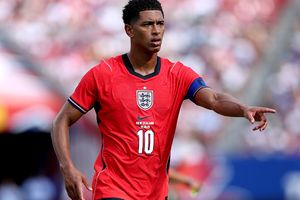 Jude Bellingham: England boss Thomas Tuchel claims Real Madrid star has a fight on his hands to earn World Cup starting spot