

The US says it is "closely monitoring" the situation after the death of a laboratory worker in Russia who may have been exposed to pneumonic plague.
The female researcher at the Irkutsk Anti-Plague Research Institute of Siberia and the Far East had died last week of "pneumonia of unknown etiology" or origin, according to the country's consumer welfare service.
It said the "sanitary-epidemiological situation" in the Irkutsk region and the cities of Irkutsk and Shelekhov was "stable".
Russian authorities said they found no evidence the researcher's illness was caused by any of the pathogens she worked with.
Almost 200 people who had been in contact with the researcher were now being observed, said reports citing a regional leader.
Maksim Modin, mayor of the Shelekhov municipal district near the border with Mongolia, said the inpatient facility where the researcher was treated had been closed for quarantine.
Russian authorities have not confirmed the 28-year-old researcher's exact cause of death.
The World Health Organisation (WHO) has said the pneumonic form of plague is especially contagious and "can trigger severe epidemics through person-to-person transmission via respiratory particles".
Asked to comment on the case, Kremlin spokesman Dmitry Peskov said the public and media should follow official statements rather than "rumours or speculation".
What are the symptoms?
According to the WHO, it is the most virulent form of plague and the incubation period can be as short as 24 hours.
Symptoms appear quickly - sometimes less than 24 hours after infection. They include severe respiratory symptoms such as shortness of breath and coughing, often with blood-tainted mucous.
How is it treated?
The WHO said pneumonic plague can be fatal within 18 to 24 hours of disease onset if left untreated.
But common antibiotics for enterobacteria can effectively cure the disease if they are given early.
How is it transmitted?
The WHO said: "Any person with pneumonic plague may transmit the disease via respiratory particles to other humans. Untreated pneumonic plague, if not diagnosed and treated early, can be fatal.
"However, recovery rates are high if detected and treated in time - within 24 hours of onset of symptoms."
More from Sky News:
US removes bombers from RAF base
Spanish PM calls snap election
How easy is it spread from person to person?
Dr Ashish Jha, who was the White House COVID-19 response coordinator from 2022 to 2023, said "it's actually very hard" for pneumonic plague to spread from person to person.
Dr Jha said "much more" information and transparency was needed from Moscow.
If this is an isolated case of pneumonic plague and no one else dies then "it will probably end there", he told NBC News.
"If there were weapons programmes, biological weapons programmes in these labs, that would be much more concerning to me," he said. "We need to understand that now."
Ian Jones, professor of virology at the University of Reading, said: "This case here seems like a rare lab accident and is unlikely to go much further.
"Although it is true that pneumonic plague is directly transmissible, the contacts of the primary case are known and can be treated if they show any sign of infection.
"Plague carries a huge history and is still present in many parts of the world including Russia, but the living conditions associated with how it previously spread are no longer generally true, antibiotics are available and its potential is therefore limited."
From 2019 to 2025, 10 countries reported more than 3,800 suspected human plague cases to the WHO, the agency said last week.
Six of the countries had confirmed cases, most of them in the Democratic Republic of the Congo and Madagascar, with 423 deaths.

(c) Sky News 2026: US 'closely monitoring' after Russian laboratory worker 'dies of suspected pneumonic plague'
 Whisky to be aged in space for first time in university satellite project
 Campaigners demand public consultation on mega data centres
 SpaceX flight led by first black female commander sets US speed record
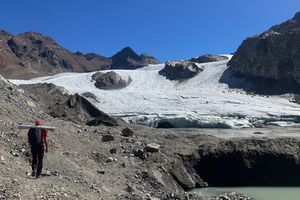 'Devastating year' as Swiss glaciers shed 5% of ice amid record-breaking heatwaves